The HCB Hospitales Group provides a complete Podiatry service in its main medical centres: HCB Benidorm, HCB Denia and HCB Calpe.
The specialist in charge performs a general assessment of the foot, focusing on the problem and performing the indicated treatment to resolve the problem.
Here are some of the most frequent problems:
1. Hallux Valgus / Bunions
2. Claw, mallet, hammer toes.
3. Spurs / fasciitis
4. Metatarsal pain
5. Ingrown nails
6. Calluses between the toes
The evaluation process consists of three stages:
• Clinic history
• Physical exam
• Other special investigations (radiology, MRI, cultures, pressure platform …)
The HCB Podiatry service has the following specialties:
HCB has a team of specialists in minimally invasive foot surgery that allows for corrections of large foot deformities, reducing the risk of complications and considerably shortening recovery times compared to more traditional techniques.
(The beginnings of this technique are in the US, where it is currently one of the most widely used surgical techniques to address deformities in the feet).
The main advantages of minimally invasive foot surgery are:
1. 2-3 mm micro incisions.
2. Minimal postsurgical pain as there is no tissue dissection
3. Absence of scars.
4. Indicated in patients with vascular disorders of the lower limbs (poor circulation, varicose veins) or systemic diseases (diabetes, HT).
5. Outpatient surgery, the patient returns walking on his own feet to his home hours after the surgery
6. Anaesthetic blocks at the ankle level.
7. No osteosynthesis. In most interventions (95%) it is not necessary due to the design of the osteotomies.
No, one of the main advantages of minimally invasive foot surgery is the postoperative period, which is practically pain free. And those who present any type of discomfort can be perfectly controlled with oral medication. In addition, as a general rule, the postoperative periods are very comfortable for our patients since, in addition to being able to walk from the first day, only a weekly cure is necessary for approximately 4 weeks in those more complicated cases.
General references:
Hallux Valgus / Bunions 1 weekly cure for 4 weeks
Claw, mallet, hammer toes 1 cure weekly for 2 or 3 weeks
Spurs / fasciitis 1 weekly cure for 2 weeks
Metatarsal pain 1 weekly cure for 3 weeks
Ingrown nails 1 cure every 3 days for 2 weeks
Calluses between the toes 1 weekly cure for 2 weeks
In addition to a proven experience in minimally invasive foot surgery at HCB, the basis of any surgical intervention is patient safety, which is why all clinical and surgical activity takes place in a hospital environment, with a surgical team with proven experience that will make the intervention quick and comfortable for the patient and will allow the surgeon-patient interaction to be fluid.
At HCB Hospitales we have the latest technology and one of the most advanced systems on the market for performing treatments with tailored templates. To do this, once our biomechanical examination protocol has been carried out, we assess the need for treatment and the different types of tailored template, depending on the patient and the alteration.
The study of the footprint consists of analysing the behaviour of the foot in unloading, loading and during movement and what influence it is having on other structures such as the ankle, knee, hip and spine. Its objective is to analyse movements or unwanted positions that may be the origin of a problem.
When is it necessary to carry out a footprint study?
It is of interest in the following cases, among others:
• Flat feet or arched feet.
• Pain in the metatarsals.
• Plantar fasciitis and heel spurs.
• Tendinitis and overloads.
• Ankle instabilities.
• Differences in length between legs.
Of special interest is the paediatric and infant patient, in whom it is of interest to carry out their first study of the footprint between 5-7 years, to be able to rule out problems such as:
• Infant flatfoot
• Valgus knees (X knees)
• Frequent falls
• Heel pain
Walking on tiptoes
And in the cases in which any of these problems are already present, carry out an assessment and prescribe the most appropriate treatment.
In many cases, dermatological problems of the foot require an evaluation with the same principles as in other areas of the body. Despite this, it is necessary to understand that many foot problems are caused directly by alterations in the normal function of the foot such as poor footing, abnormal gait movements and factors such as footwear, friction and the effects of pressure from day to day.
Main dermatological problems treated:
• Papilloma or plantar warts
• Ingrown toenails
• Nail and skin fungus
• Non-infectious nail diseases
• Dermatitis
Diabetes is one of the most important health problems today. Its impact is very high in terms of prevalence and costs for society. This is due to the problems that it generates both acutely and chronically in those patients who suffer from it, affecting their quality of life in a considerable way.
When we treat a diabetic patient, the following must always be taken into account:
1. Dermatological problems, since they are predisposed to suffer different types of injuries and wounds whose recovery is usually much slower than the rest and with a special facility for infection and derived complications. Special interest in detecting atrophies and skin dryness, since they are the first step in this process.
2. Neuropathic problems. It is always important to assess the nervous state (sensitivity) of the patient, which makes them more predisposed to suffer injuries and alterations without being aware of them due to their associated sensory deficit.
3. Vascular problems. It is very common to find alterations of vascular origin in diabetic patients, such as decreased pulse, difficulties in venous return or occlusion of small blood vessels. All of this resulting in a lower oxygen and nutritional contribution to the most distant tissues with all that this implies.
4. Gait disturbances. When the above fields are affected, the tendency is to generate loss of the normal function of the foot muscles and with them the appearance of deformities of special risk in this type of patient (bunions, claw toes, calluses …)
At HCB we have a multidisciplinary team with advanced protocols in accordance with the Spanish Diabetes Society, for the care and treatment of diabetic foot.
Especialista/s:
Dr. Luis Guerra Castro - HCB Benidorm
Dr. Luis Guerra Castro - HCB Calpe
Ana Frau Frau - HCB Denia

Con motivo del Día Mundial del Cáncer de Mama, ambas entidades impulsan durante el mes de octubre acciones de sensibilización y prevención, entre ellas la valoración inicial de la salud ósea en distintas localidades de la comarca.
Con motivo del Día Mundial del Cáncer de Mama, HCB Hospitales pone en valor su colaboración con ANÉMONA, el Grupo de Autoayuda para Mujeres con Cáncer de Mama de la Marina Baixa, a través de distintas iniciativas desarrolladas durante el mes de octubre para acompañar a las mujeres y contribuir al cuidado de su salud.
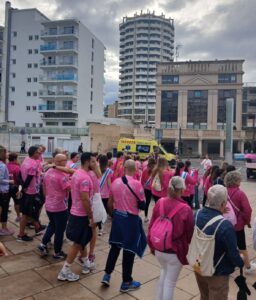
Entre estas acciones destaca la participación de HCB Hospitales en la Marea Rosa de Benidorm, celebrada el domingo 18 de octubre, una marcha solidaria que reúne a la ciudadanía en torno a la sensibilización y la lucha contra el cáncer de mama.
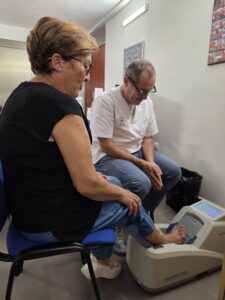
Asimismo, durante este mes se están llevando a cabo, junto a ANÉMONA y los ayuntamientos participantes, jornadas de valoración inicial de la salud ósea mediante un sistema portátil de medición. La iniciativa ya ha llegado a Benidorm, Altea, l’Alfàs del Pi, Polop y Callosa d’en Sarrià, y todavía quedan algunas citas programadas.
La salud ósea es un aspecto importante del cuidado integral de las mujeres que han pasado por un cáncer de mama. Algunos tratamientos oncológicos pueden favorecer la pérdida de masa ósea y aumentar el riesgo de osteopenia y osteoporosis, por lo que resulta fundamental prestar atención a este aspecto durante el seguimiento de la paciente.
Las pruebas realizadas en estas jornadas permiten obtener una primera orientación sobre el estado de la salud ósea e identificar posibles señales de riesgo que aconsejen una valoración médica más completa. No sustituyen a una densitometría ósea diagnóstica ni permiten establecer por sí solas un diagnóstico de osteoporosis. Cuando los resultados sugieren un posible riesgo, se puede recomendar a las participantes que consulten con un profesional sanitario para determinar si necesitan pruebas complementarias o seguimiento específico.
Esta iniciativa se enmarca en el compromiso de HCB Hospitales con la prevención y la promoción de la salud, acercando recursos sanitarios a la población y facilitando la detección de posibles factores de riesgo.
La colaboración con ANÉMONA y los ayuntamientos de la Marina Baixa permite acercar estas acciones preventivas a distintas localidades y reforzar la importancia de cuidar la salud más allá del tratamiento de la enfermedad.
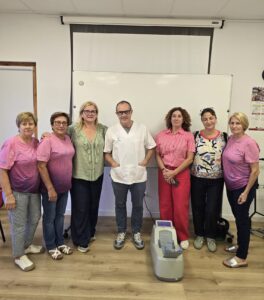
Con motivo del Día Mundial del Cáncer de Mama, HCB Hospitales recuerda la importancia de la prevención, el seguimiento médico y la atención integral a las mujeres, incluyendo aquellos aspectos de su salud que pueden verse afectados durante y después de un proceso oncológico.
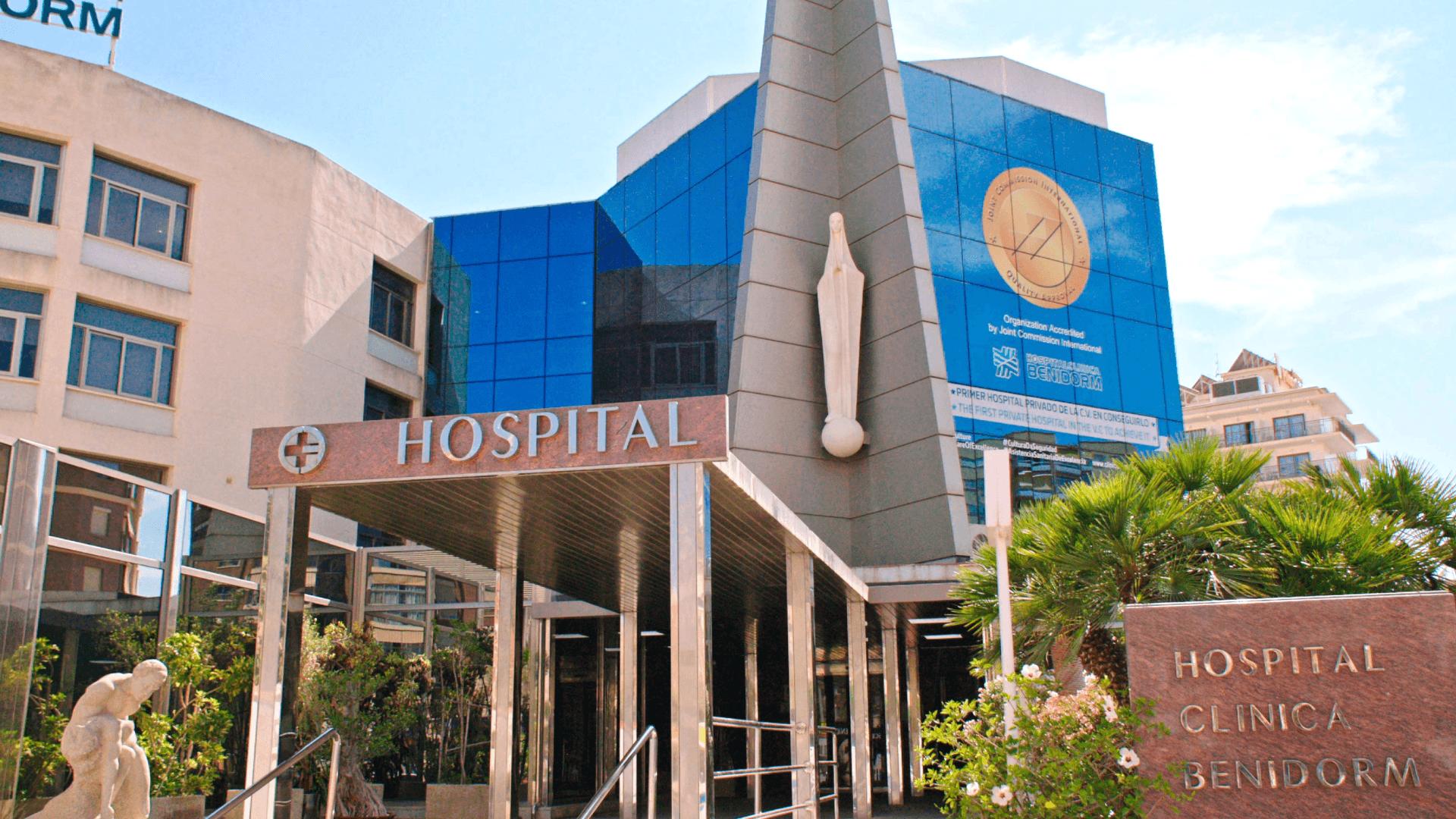
The Ribera healthcare group has finalized the integration of the HCB Group following the receipt of the necessary antitrust approval, marking a new step in its growth and consolidation strategy.
This represents Ribera’s largest private healthcare investment to date, enabling it to strengthen its market standing and consolidate its position as a leading healthcare operator in Spain with an international presence.
The HCB Group is a private healthcare provider with a 40-year history and deep roots in the Valencian Community. With a team of over 650 professionals, it operates two hospitals in Benidorm and Dénia, three medical centers in Calpe, Moraira, and Albir, and two diagnostic imaging centers in Alicante. Its care model is based on a close relationship with patients and a commitment to quality. It was the first private facility in the Valencian Community to receive accreditation from the prestigious Joint Commission International, the most rigorous healthcare accreditation regarding patient safety. Its incorporation into the Ribera group significantly expands Ribera’s healthcare capacity in the Valencian Community, where the group already manages two hospitals (Ribera Imske and Vinalopó University Hospital), 14 primary care centers (the Vinalopó Health Department), three clinics (Ribera Mestalla, Ribera Pasarela, and Ribera Ciudad Quesada), and other health services—such as a dialysis center (Nefrosol), the headquarters of its laboratory division (Ribera Lab), and the headquarters of its technology arm (Futurs).
This transaction is part of the group’s growth plan and the European project Ribera is driving alongside its key shareholder, Vivalto Santé. In recent months, the company has also strengthened its international expansion by entering Poland and developing its diversification strategy in Central Europe, with a presence in Slovakia and the Czech Republic.
According to Pablo Gallart Gaspar, CEO of the Ribera group, “the acquisition of the HCB group aligns with our growth plan to establish ourselves as a leading healthcare operator in Europe. We are very proud to welcome a group with a solid track record in patient care and an outstanding team to Ribera, joining our workforce of over 9,200 professionals.”
The CEO added that “the integration will be carried out gradually to ensure service continuity, with the goal of continuing to improve the population’s health and well-being alongside a top-tier team of professionals.” He also highlighted that “Ribera is undergoing a period of growth and consolidation, advancing a healthcare model based on clinical excellence, innovation, and talent.”
Legal and financial advisors for the transaction included TM Team and VCGH Abogados for the sellers, and Deloitte, Cuatrecasas, and the internal team for Ribera. About Ribera

Ribera is a healthcare group and provider of public and private services, boasting a workforce of over 9,000 professionals and 26 years of experience managing projects across Spain, Portugal, Central Europe, Latin America, and the Middle East. It manages 16 hospitals, more than 60 outpatient clinics, and 14 primary care centers. In Spain, it operates in seven autonomous communities (Valencia, Madrid, Murcia, Galicia, Asturias, Aragon, and Extremadura), while its international operations include the Cascais Hospital in Portugal, two hospitals in Prague, and a network of clinics and diagnostic imaging centers in Slovakia and Poland. Additionally, the group comprises a dedicated laboratory division (Ribera Lab), a healthcare consultancy arm, a technology company (Futurs), a purchasing division (Ribera b2b), and an educational institution offering a university nursing program and advanced vocational training (Cepovisa).
Ribera is a socially committed group dedicated to improving the health and well-being of the population through numerous initiatives and workstreams that create value for society—both today and in the future. Ribera’s “responsible healthcare” model serves as a case study at universities and business schools such as Berkeley and Harvard Business School. The group holds multiple Joint Commission International accreditations and ranks among the top 100 companies to work for in Spain.
Alzheimer’s disease is undergoing a significant evolution, driven by the development of new biomarkers and treatments capable of targeting some of the biological mechanisms associated with the disease. In this context, HCB Hospitales continues to incorporate new diagnostic tools and prepare its healthcare pathways for therapeutic advances in the field of neurology.
The Neurology Department at HCB Benidorm, with neurologists Dr Paul Vinueza and Dr José Javier Hernández, has already begun using p-tau217 testing in selected patients. This blood biomarker is associated with the presence of neuropathological changes related to Alzheimer’s disease.
p-tau217 testing can provide information, through a blood sample, about biological processes related to amyloid and tau pathology. Its incorporation into clinical practice may allow for a more accurate and accessible assessment of certain patients, always alongside their medical history, clinical examination and neuropsychological assessment and, when indicated, other diagnostic tests.
“This new diagnostic test allows us to detect the biological changes associated with Alzheimer’s disease at an earlier stage and with a level of accuracy that, until now, was only available through more complex tests. It will not always replace imaging studies or invasive tests, but it can complement them and, in many cases, when the results are very clear, it may avoid the need for some of these tests. It is always integrated with the patient’s clinical and neuropsychological assessment,” explains Dr Paul Vinueza, neurologist at HCB Benidorm.
The incorporation of biomarkers such as p-tau217 is part of a broader shift towards a diagnosis increasingly based on the biology of the disease, in addition to its clinical manifestations. This may help specialists identify more accurately those patients who require further investigations or specific therapeutic strategies.
But progress is not limited to diagnosis. The Neurology Department at HCB Hospitales is also working on protocols for the use of donanemab, one of the new treatments targeting Alzheimer’s disease in its early symptomatic stages.
Donanemab is a monoclonal antibody directed against beta-amyloid plaques. Its use is indicated for selected adults with early symptomatic Alzheimer’s disease, such as mild cognitive impairment or mild dementia, provided that the presence of amyloid pathology is confirmed and the established clinical and safety criteria are met.
Unlike traditional symptomatic treatments, these new therapies aim to act on one of the biological processes associated with the disease, representing a significant change in the way Alzheimer’s is approached. They are not a cure, nor can they completely stop the progression of the disease.
According to Dr Vinueza, this new treatment “represents a change in approach. For the first time, we have drugs that target one of the biological mechanisms of the disease — the removal of beta-amyloid plaques — rather than focusing solely on symptom control, as previous treatments have done.”
The treatment is intended for a carefully selected group of patients. Before treatment can be considered, the presence of amyloid pathology must be confirmed through the appropriate tests, while different clinical, genetic and safety factors must also be assessed. The patient must also be in an early stage of the disease.
The incorporation of these new therapies also represents an organisational and clinical challenge. Appropriate patient selection, confirmation of amyloid pathology and clinical and radiological follow-up are all part of a process that requires coordination and specialised expertise.
“It is not simply a matter of having access to a medication, but of being prepared to provide the entire care pathway it requires,” highlights the Neurology Department at HCB Hospitales.
Treatment requires specialist assessment and follow-up, including imaging tests and other monitoring, due to the possible occurrence of amyloid-related imaging abnormalities (ARIA) and other potential adverse reactions.
“At HCB Hospitales, we are already organising the necessary care pathway so that, when the time comes, we can administer the treatment safely and appropriately,” explains Dr Vinueza.
The development of biomarkers and new treatments is making the identification of Alzheimer’s disease in its early stages increasingly important.
“We are moving from a diagnosis based solely on symptoms to one that also takes into account the biology of the disease, through amyloid and tau biomarkers and the assessment of neurodegeneration. And we are moving from purely symptomatic treatments towards therapies that act on disease mechanisms,” says the HCB Benidorm neurologist.
The first antibodies targeting amyloid have demonstrated a moderate clinical benefit. “We are not talking about a cure, but they already point us in a new direction,” says Dr Vinueza.
In the coming years, the specialist expects blood biomarkers such as p-tau217 to become increasingly present in clinical practice, helping to make diagnosis earlier and more accessible, while new therapeutic strategies continue to emerge.
“We expect combination therapies to be developed that address, in addition to amyloid, the tau protein and neuroinflammation,” he adds.
“In short, we are moving from treating the symptoms of Alzheimer’s disease to being able, although still to a modest extent, to act on the biology of the disease itself. And that changes the way we need to diagnose and approach it from the very beginning,” concludes Dr Paul Vinueza.
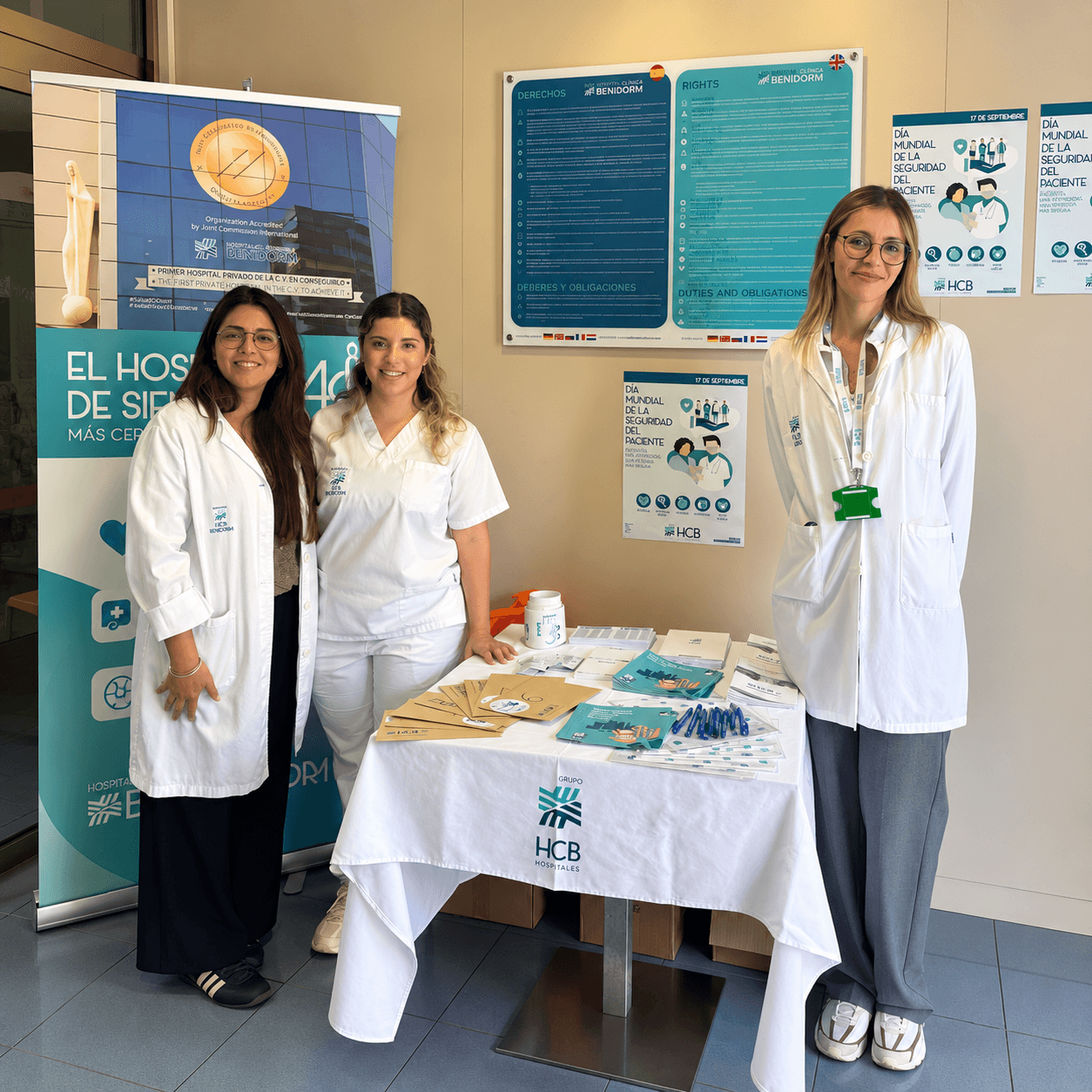
HCB Hospitales ha celebrado el Día Mundial de la Seguridad del Paciente con una jornada dirigida a pacientes y familiares en HCB Benidorm, organizada por el Departamento de Calidad y Medio Ambiente, con el apoyo de Medicina Preventiva.
La actividad se ha desarrollado en torno a una mesa informativa en la que los pacientes contaban con materiales de educación para la salud, podían resolver dudas, participar en un juego de preguntas sobre el uso seguro de los medicamentos y llevarse algunos detalles preparados especialmente para la jornada.
El objetivo es acercar la cultura de la seguridad del paciente a la población y facilitar información práctica que ayude a las personas a participar de forma más activa y segura en el cuidado de su salud.
El concepto elegido por HCB para esta celebración resume el propósito de la iniciativa: “Pacientes más informados, una atención más segura”.
La seguridad del paciente también empieza por estar informado
El Día Mundial de la Seguridad del Paciente, que se celebra cada 17 de septiembre, fue establecido por la Organización Mundial de la Salud (OMS) en 2019 para aumentar la concienciación sobre la seguridad del paciente, implicar a las partes interesadas e impulsar medidas para reducir los daños evitables en la atención sanitaria.
En 2026, la campaña mundial se centra en la atención segura para las enfermedades no transmisibles, bajo el lema “¡Atención segura durante toda la vida!”. La OMS señala que las personas con enfermedades no transmisibles suelen necesitar atención continuada durante largos periodos y que los riesgos para su seguridad pueden aparecer a lo largo de todo el proceso asistencial, desde la prevención y la detección precoz hasta el tratamiento, la atención a largo plazo y el autocuidado.
La campaña pone además un énfasis especial en que las personas con enfermedades no transmisibles sean partícipes de una atención segura, y destaca la alfabetización en salud y la participación significativa de los pacientes como elementos que contribuyen a una atención más segura y de mayor calidad.
En este contexto, HCB Hospitales ha querido trasladar la seguridad del paciente a un espacio cercano y práctico: la información y las herramientas que permiten al paciente comprender mejor su salud, participar en su atención y cuidar de sí mismo en el día a día.
Una jornada para promover el autocuidado y la participación del paciente
La mesa informativa ha reunido diferentes materiales de educación para la salud relacionados con el autocuidado y la seguridad del paciente. Entre ellos, había material específico sobre uso seguro de los medicamentos, que servía también como punto de partida para un juego de preguntas dirigido a los pacientes. La actividad quería abordar de una manera sencilla y participativa algunas cuestiones relacionadas con el conocimiento y el uso adecuado de los tratamientos.
La información al paciente permite reforzar cuestiones fundamentales como conocer qué medicamento se toma, para qué sirve, cómo y cuándo debe utilizarse, informar de los tratamientos habituales y comunicar posibles alergias, reacciones o dudas a los profesionales sanitarios.
La OMS incluye la seguridad de la medicación entre las prácticas que deben reforzarse dentro de la atención segura a las personas con enfermedades no transmisibles.
Una actividad integrada en la cultura de calidad y seguridad de HCB Benidorm
La jornada se enmarca en la cultura de Calidad y Seguridad de HCB Benidorm, acreditado por Joint Commission International (JCI).
Entre las áreas que evalúa esta acreditación se encuentran las Metas Internacionales de Seguridad del Paciente, la administración de medicamentos y la educación del paciente y la familia, además de otros ámbitos relacionados con la calidad asistencial, la prevención y control de infecciones, la gestión de la información y la mejora continua.
La educación del paciente forma así parte de una visión de la seguridad que no se limita a los procesos que tienen lugar dentro del hospital, sino que también contempla la información, la participación y el autocuidado de las personas.
Pacientes más informados, una atención más segura
Con esta iniciativa, HCB Hospitales incorpora por primera vez a sus propios pacientes a la celebración del Día Mundial de la Seguridad del Paciente, convirtiendo la jornada en un espacio de encuentro, educación y participación.
“Pacientes más informados, una atención más segura” resume así el propósito de esta jornada y el compromiso de HCB con una atención centrada en las personas, en la que informar, escuchar y hacer partícipe al paciente forman parte de la calidad y la seguridad asistencial.

El especialista desarrollará su actividad en HCB Benidorm y HCB Dénia, aportando una amplia experiencia en cirugía hepatobiliopancreática, cirugía laparoscópica y cirugía abdominal de urgencia
HCB Hospitales incorpora al Dr. Ricardo Ernesto Andino Cardona, especialista en Cirugía General y del Aparato Digestivo, que desarrollará su actividad asistencial en HCB Benidorm y HCB Dénia.
Con una trayectoria profesional de más de dos décadas, el Dr. Andino cuenta con experiencia en diferentes áreas de la cirugía general y digestiva, tanto en procedimientos convencionales como laparoscópicos y en cirugía laparoscópica avanzada.
El especialista realizó su formación como médico especialista en Cirugía General y del Aparato Digestivo vía MIR, entre los años 2000 y 2005, en el Hospital Clínico Universitario San Carlos de Madrid. Posteriormente, desarrolló parte de su trayectoria profesional en centros hospitalarios de referencia como el Hospital Vall d’Hebron de Barcelona, donde ejerció como cirujano adjunto entre 2005 y 2010 dentro del ámbito de la cirugía hepatobiliopancreática (HBP).
A lo largo de su carrera también ha ejercido como cirujano adjunto en el Hospital Comarcal de Vinaròs, el Hospital Universitari Sant Joan de Reus y el Hospital General Universitario de Huesca, donde ha desarrollado su actividad desde 2021.
Experiencia en cirugía hepatobiliopancreática y laparoscópica
Entre sus principales áreas de experiencia destaca la cirugía hepatobiliopancreática, tanto en procesos benignos como malignos, dentro de equipos multidisciplinares y comités de tumores, así como mediante técnicas de cirugía convencional y laparoscópica.
Su experiencia incluye también la cirugía abdominal de urgencia, abierta y laparoscópica, así como la cirugía de la pared abdominal, incluyendo el tratamiento de hernias y eventraciones primarias y recidivadas.
En el ámbito de la cirugía laparoscópica avanzada, el Dr. Andino cuenta con experiencia en cirugía oncológica supramesocólica, hernia hiatal y cirugía gástrica, intestinal y colorrectal. También desarrolla actividad en coloproctología general, cirugía de tiroides y paratiroides y cirugía dermatológica oncológica y menor.
Asimismo, cuenta con experiencia en cirugía en régimen de Cirugía Mayor Ambulatoria (CMA/UCSI) y hospitalización de corta estancia.
Refuerzo de la atención quirúrgica en HCB Benidorm y HCB Dénia
La incorporación del Dr. Ricardo Andino supone un nuevo refuerzo para el área de Cirugía General y del Aparato Digestivo de HCB Hospitales, ampliando la experiencia y capacidad quirúrgica disponible para los pacientes de HCB Benidorm y HCB Dénia.
Con esta incorporación, HCB continúa avanzando en su compromiso por ofrecer una atención especializada, integral y cercana, incorporando profesionales con experiencia en diferentes áreas de la práctica quirúrgica y favoreciendo una atención adaptada a las necesidades de cada paciente.

HCB Hospitales continúa reforzando su equipo de especialistas con la incorporación del Dr. Rafał Mościcki, médico especialista en Cardiología con una amplia trayectoria asistencial en la provincia de Alicante y una destacada experiencia en el tratamiento de pacientes internacionales.
El Dr. Mościcki pasa consulta en HCB Benidorm y HCB Moraira, y próximamente también atenderá a los pacientes de HCB Calpe, ampliando así la cobertura del servicio de Cardiología en los diferentes centros del grupo.
Licenciado en Medicina por la Universidad Médica de Varsovia, completó su especialización en Cardiología en el Hospital General Universitario de Alicante tras superar el examen MIR en España. Desde entonces ha desarrollado su carrera profesional en el Hospital General Universitario de Elda y, desde 2019, también forma parte del equipo de Cardiología del Hospital Quirónsalud Torrevieja.
Su perfil combina una sólida experiencia clínica con una formación continuada en áreas como la imagen cardíaca, la fibrilación auricular y la diabetes y el riesgo cardiovascular. Además, participa de forma activa en las principales sociedades científicas nacionales e internacionales de Cardiología y es autor de diversas publicaciones y comunicaciones científicas.
Otro de los aspectos que define su trayectoria es su perfil internacional. El Dr. Mościcki habla español, inglés, alemán, ruso y polaco, lo que le permite ofrecer una atención cercana y personalizada a pacientes de distintas nacionalidades, una característica especialmente relevante en el entorno de la Costa Blanca y en la asistencia sanitaria internacional que presta HCB Hospitales.
Con esta incorporación, HCB Hospitales continúa apostando por un modelo asistencial basado en la excelencia médica, la atención personalizada y una asistencia especializada tanto a pacientes nacionales como internacionales.

Planning a holiday or an extended stay on the Costa Blanca? A little preparation can make accessing healthcare in Spain easier if you need it.
Whether you are visiting Spain for a few days, spending the winter on the Costa Blanca or living here as an international resident, it is worth preparing for your healthcare needs before you travel.
Knowing which documents to bring, how your health insurance works and what medical information to keep available can help you feel more confident during your stay.
Here is a practical checklist to help you prepare.
If you need to see a doctor or visit a hospital in Spain, having the right documentation available can help the healthcare team identify you and understand your healthcare coverage.
Before travelling, prepare the following:
Keep digital copies of essential documents in a secure location, as well as any original documents you may need to present.
Healthcare coverage in Spain depends on your circumstances, the type of insurance you have and the healthcare provider you visit.
If you have private health insurance or travel insurance, do not assume that every medical consultation, test or hospital visit will automatically be covered.
Before your trip, check:
If you are travelling from another European country, remember that the European Health Insurance Card and private health insurance serve different purposes. The EHIC does not replace travel insurance and does not cover private healthcare.
A useful tip: save your insurer’s contact details on your phone before departure. If you need medical care, you will not have to search for your policy while feeling unwell.
If you take medication regularly or have a chronic condition, preparing in advance is particularly important.
Before leaving home:
If you need to bring prescription medication into Spain, check the applicable rules before travelling, particularly for controlled medicines.
If you have a condition that requires regular monitoring or specialist appointments, it is also worth considering how you would access medical care during your stay.
Once your documents, insurance and regular medication are organised, you can prepare a small kit for minor health problems.
Depending on your needs, this might include:
Consider the climate at your destination when packing. On the Costa Blanca, sun protection and staying hydrated are particularly important during the warmer months.
Keep medicines and other products in suitable storage conditions, and check their expiry dates before travelling.
Remember that a travel medical kit is intended for minor problems. It should not delay professional medical assessment if you have concerning symptoms.
If you become unwell during your stay, knowing where to seek help can make the experience less stressful.
Your options will depend on the urgency of your symptoms, your healthcare needs and your insurance coverage. If you need private medical care, check your policy and contact your insurer when appropriate.
At HCB Hospitales, we care for local and international patients across the Costa Blanca. Our teams can help international patients understand the available healthcare options and, where applicable, navigate insurance and administrative requirements.
If you need immediate emergency assistance in Spain, call 112.
For more information, you can also read our guides:
A little preparation can make a difference
Before travelling to Spain, take a few minutes to organise your identification, healthcare documents, insurance details and medication.
You may never need them, but having everything ready can make it easier to access appropriate medical care if the unexpected happens.
Enjoy your stay on the Costa Blanca, knowing you are better prepared.
This article provides general information and does not replace professional medical or insurance advice. Healthcare entitlement and coverage depend on individual circumstances and applicable rules.

Llega el cambio de estación y, con él, una tarea habitual: guardar la ropa de verano y sacar chaquetas, mantas, edredones y otras prendas que llevan meses almacenadas. Pero para algunas personas, este momento del año viene acompañado de estornudos, mocos, congestión nasal, picor o lagrimeo de ojos. ¿Te ocurre cada vez que haces el cambio de armario? Puede que no sea casualidad.
¿Por qué aparecen síntomas al sacar la ropa guardada?
Los textiles que permanecen almacenados durante meses pueden acumular ácaros del polvo. Al abrir cajas, mover prendas, sacudir mantas o preparar la ropa de temporada, estas partículas pueden pasar al ambiente y entrar en contacto con las vías respiratorias.
En las personas sensibilizadas, esto puede desencadenar síntomas de alergia respiratoria: rinitis, rinoconjuntivitis o asma alérgica.
Los ácaros del polvo doméstico se encuentran especialmente en elementos textiles como colchones, almohadas, mantas, edredones, alfombras y muebles tapizados.
Pero hay algo importante: que los síntomas aparezcan durante el cambio de armario no significa necesariamente que seas “alérgico al polvo”, pero sí es altamente probable cuando las molestias aparecen de forma repetida.
Lagrimeo, picor de ojos, mocos… ¿qué síntomas pueden aparecer?
Una reacción alérgica respiratoria puede manifestarse de diferentes maneras:
Una de las claves es observar cuándo aparecen los síntomas y si se repiten siempre en situaciones similares. Si cada año empiezas con molestias coincidiendo con el cambio de armario, puede ser interesante consultar con un especialista.
¿Qué puedes hacer si tienes alergia?
Si sospechas que los ácaros del polvo pueden estar relacionados con tus síntomas, algunas medidas pueden ayudarte a reducir la exposición:
Pero estas medidas no sustituyen al diagnóstico. Y aquí está la pregunta importante:
¿Y por qué es importante estudiar una posible “alergia al polvo”?
Si los síntomas aparecen una y otra vez, averiguar qué los provoca es el primer paso para poder tratarlos adecuadamente y de forma individualizada.
No todas las alergias tienen el mismo origen y dos personas con síntomas parecidos pueden estar sensibilizadas a alérgenos diferentes. Por eso, en Alergología es fundamental combinar la historia clínica del paciente con las pruebas diagnósticas que el especialista considere necesarias.
Diagnóstico preciso para un tratamiento personalizado
En HCB Hospitales contamos con diferentes herramientas para el estudio y diagnóstico de las enfermedades alérgicas. En función de los síntomas y de las características de cada paciente, el alergólogo puede recurrir a diferentes pruebas, como pruebas cutáneas, análisis específicos o pruebas de función respiratoria (espirometría, test broncodilatador, FeNO).
Además, HCB cuenta con herramientas de diagnóstico molecular, como el Test ALEX, que permite analizar la sensibilización frente a numerosos alérgenos y proteínas específicas a partir de una muestra de sangre.
Esto puede aportar información especialmente útil en determinados pacientes y ayudar al especialista a conocer con mayor precisión el perfil de sensibilización.
No todas las personas necesitan las mismas pruebas. El alergólogo determina qué estudios son los más adecuados en cada caso.
Del diagnóstico al tratamiento
Una vez identificado el desencadenante, el siguiente paso es valorar qué medidas y tratamientos son los más adecuados para cada paciente.
Dependiendo del tipo de alergia y de su intensidad, pueden contemplarse diferentes opciones: desde medidas para evitar o reducir la exposición al alérgeno y tratamientos destinados a controlar los síntomas, hasta tratamientos específicos como la inmunoterapia con alérgenos, conocida como vacuna para la alergia. Esta opción de tratamiento es segura, potencialmente curativa y altamente eficaz, y está indicada para todas las personas que tengan afectación en su calidad de vida por la alergia.
El objetivo es siempre el mismo: conocer qué está provocando los síntomas para poder ofrecer un abordaje personalizado.
¿Cada cambio de armario te pasa lo mismo?
Si cada cambio de temporada viene acompañado de estornudos, mocos, picor de ojos o síntomas respiratorios, no tienes por qué asumir que es simplemente “alergia al polvo”. Realizar un diagnóstico preciso con un profesional adecuado puede ayudarte a controlar y corregir estos síntomas tan molestos, sin necesidad de tener que conformarte con sufrirlos en cada temporada.
Consulta con el Servicio de Alergología de HCB Hospitales.
Hablar de disfunción eréctil puede resultar difícil. Sin embargo, es un problema frecuente y sus causas pueden ser diversas, por lo que conocer su origen es un primer paso importante para encontrar el abordaje más adecuado.
¿Puede la fisioterapia de suelo pélvico formar parte de ese abordaje? En determinados casos, sí.
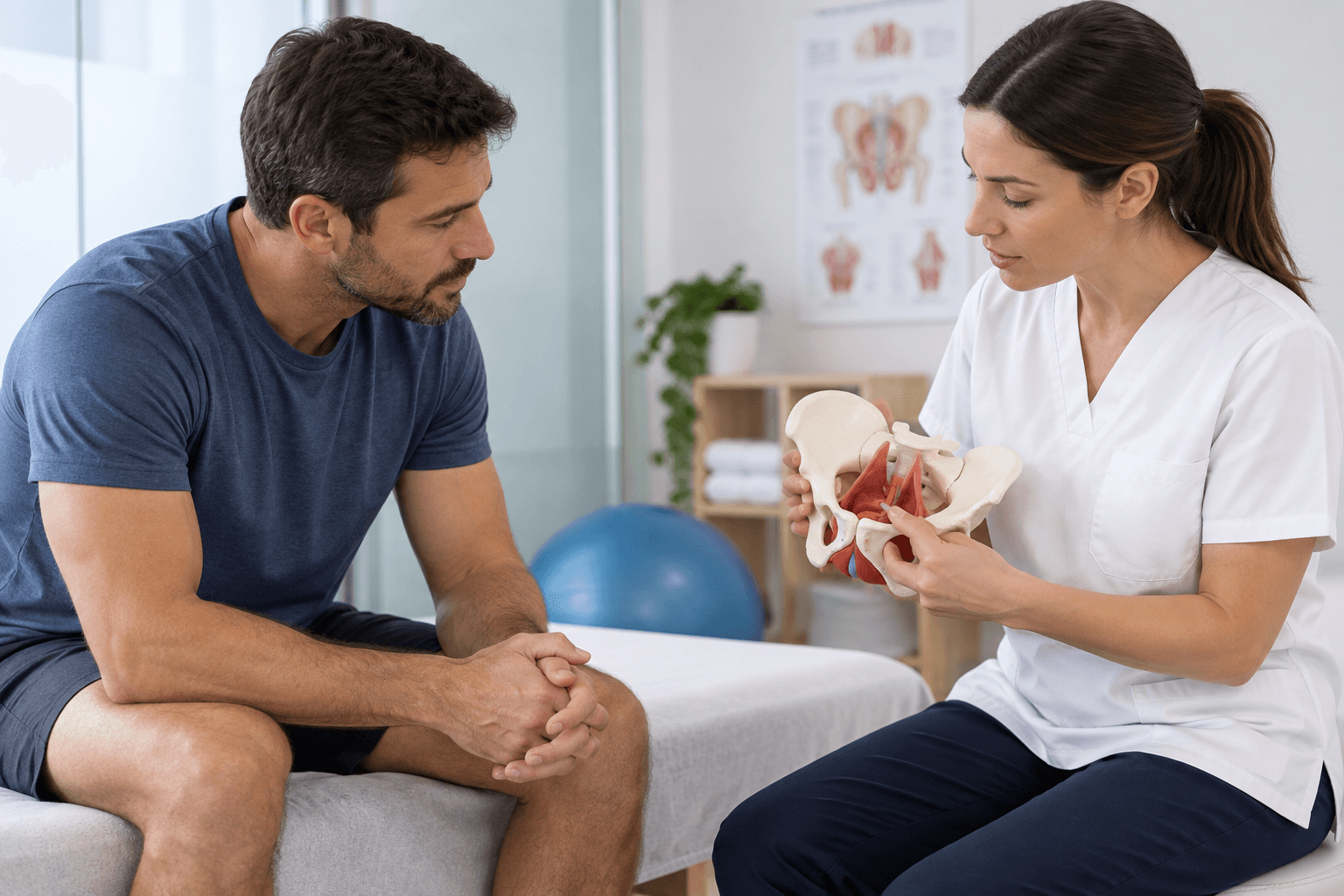
La fisioterapia de suelo pélvico puede trabajar sobre algunos de los factores musculares y funcionales relacionados con la función sexual masculina, siempre dentro de una valoración individualizada y, cuando sea necesario, en coordinación con otros profesionales sanitarios.
La disfunción eréctil no siempre tiene un origen funcional
No todos los casos de disfunción eréctil tienen el mismo origen. Puede existir relación con factores vasculares, hormonales, neurológicos, psicológicos o emocionales, así como con determinados medicamentos. También pueden intervenir diferentes factores relacionados con la musculatura y el funcionamiento del suelo pélvico. Por eso, antes de plantear un tratamiento es importante conocer qué puede estar ocurriendo en cada caso.
La fisioterapia no sustituye la valoración médica cuando esta es necesaria, lo habitual es el abordaje interdisciplinar.
¿Qué puede trabajar la fisioterapia de suelo pélvico?
El suelo pélvico participa en diferentes funciones relacionadas con la sexualidad masculina. Cuando existe una alteración de su fuerza, coordinación, tono o capacidad de relajación, puede ser necesario trabajar estos aspectos.
La fisioterapia puede abordar diferentes objetivos, entre ellos:
¿En qué consiste la primera valoración?
El tratamiento comienza con una valoración inicial completa y personalizada. En ella, la fisioterapeuta recoge información sobre la historia clínica, los hábitos, los síntomas y otros aspectos que puedan estar relacionados con la función sexual.
A partir de ahí puede realizarse una valoración específica de la musculatura del suelo pélvico, externa y, cuando está indicado y el paciente lo acepta, interna.
El objetivo es conocer cómo está funcionando la musculatura y establecer unos objetivos realistas y un plan de tratamiento adaptado a cada persona. No se trata simplemente de “hacer ejercicios de suelo pélvico”.
La intervención puede incluir ejercicio terapéutico, terapia manual, reeducación respiratoria y trabajo de relajación, según las necesidades de cada paciente. El seguimiento permite valorar la evolución y ajustar progresivamente el tratamiento.
¿Cuándo puede ser útil consultar?
La fisioterapia de suelo pélvico puede formar parte del abordaje cuando existen situaciones como:
Pero es importante recordar que no todas las disfunciones eréctiles tienen un origen funcional.
Cuando existe sospecha de una causa vascular, hormonal, neurológica, psicológica o farmacológica, puede ser necesario realizar una valoración médica y abordar el problema de forma coordinada.
Un abordaje individualizado y confidencial
Hablar de función sexual requiere confianza. Por eso, la valoración debe realizarse en un entorno de privacidad, respeto y confidencialidad, donde el paciente pueda explicar sus síntomas y dudas con tranquilidad.
Cada caso es diferente y el tratamiento debe adaptarse a las necesidades y objetivos de cada persona.
En la Unidad de Suelo Pélvico de Fisioterapia Médica HCB Benidorm, la valoración y el tratamiento se plantean de forma individualizada, con seguimiento de la evolución y coordinación con otros profesionales cuando es necesario.
Consultar es un primer paso para entender qué está ocurriendo y conocer qué opciones de tratamiento pueden ser adecuadas en cada caso.

Septiembre trae consigo muchos cambios. Cambian nuestros horarios, recuperamos las obligaciones del trabajo y el colegio, modificamos nuestros hábitos de sueño y alimentación y, poco a poco, dejamos atrás el ritmo más relajado del verano. También cambian las temperaturas y las horas de luz.
Nuestro cuerpo necesita un tiempo para adaptarse a todos estos cambios y es habitual que, durante los primeros días, podamos sentirnos algo diferentes. Más cansados. Con menos energía. Con sueño durante el día o dificultad para dormir por la noche. Incluso con algún dolor de cabeza, cambios en el apetito o una mayor sensación de estrés.
En la mayoría de los casos, estas molestias son pasajeras y mejoran cuando recuperamos nuestros horarios y rutinas habituales.
Pero no todo lo que nos ocurre en septiembre es consecuencia de la vuelta a la rutina.
La clave está en observar cómo evolucionan los síntomas y aprender a distinguir cuándo podemos esperar, cuándo conviene pedir una cita médica y cuándo necesitamos atención urgente.
Cuando nuestro cuerpo necesita tiempo para adaptarse
Después de las vacaciones, recuperar de golpe los horarios habituales puede resultar exigente. Dormir menos horas, madrugar de nuevo, aumentar el ritmo de actividad o volver a una agenda más intensa puede traducirse en unos días de cansancio o falta de energía.
También podemos notar:
Si son molestias leves y mejoran progresivamente al recuperar nuestros hábitos, normalmente podemos dar tiempo al organismo para adaptarse.
Dormir suficientemente, mantener horarios regulares, cuidar la alimentación, hidratarse y retomar progresivamente la actividad física pueden ayudarnos en esta transición.
Cuando conviene pedir cita con el médico
Hay síntomas que no tienen por qué ser una urgencia, pero que tampoco deberíamos atribuir indefinidamente al cambio de estación.
Si una molestia persiste, se repite o empieza a interferir con nuestra vida diaria, una valoración médica puede ayudarnos a conocer su causa y decidir si es necesario realizar alguna prueba, iniciar un tratamiento o simplemente hacer seguimiento.
Algunos ejemplos son:
No significa que estos síntomas sean necesariamente indicativos de una enfermedad. Significa que cuando algo persiste o cambia respecto a nuestro estado habitual, merece la pena consultarlo en lugar de acostumbrarnos a convivir con ello.
Los centros médicos HCB pueden ser una opción cercana para recibir una valoración médica ante problemas de salud que necesitan atención pero no constituyen una emergencia.
Y hay situaciones que no deberían esperar
Hay síntomas que requieren una valoración inmediata y ante los que no debemos esperar a conseguir una cita.
Por ejemplo:
Ante este tipo de situaciones, es necesario buscar atención urgente.
¿Me espero, pido cita o voy a Urgencias?
No siempre es fácil saber dónde acudir cuando nos encontramos mal.
Y precisamente por eso, el cambio de estación puede ser un buen momento para aprender a escuchar nuestro cuerpo y diferenciar entre una molestia pasajera, un síntoma que conviene consultar y una situación que requiere atención inmediata.
Observar cómo evolucionan los síntomas también es cuidar nuestra salud. Pedir cita cuando algo persiste, también. Y reconocer una señal de alarma puede ser fundamental.
Durante las próximas semanas, desde HCB Hospitales hablaremos de algunas de las situaciones de salud más habituales durante el otoño para ayudarte a saber cuándo puedes esperar, cuándo conviene consultar y cuándo es importante acudir a Urgencias.
Porque recibir la atención adecuada también empieza por saber dónde acudir.

El inicio del curso supone muchos cambios para los niños: nuevas rutinas, horarios, más contacto con otros niños, mayor actividad y, en algunos casos, una separación de los padres después de las vacaciones.
Durante las primeras semanas es habitual que las familias perciban cambios en el sueño, el apetito o el estado general de sus hijos. Y también que aparezcan los primeros mocos, tos o episodios de fiebre. ¿Significa esto que algo no va bien? No necesariamente.
El otoño y la vuelta a los centros escolares coinciden además con una mayor circulación de algunos virus y con un aumento de las infecciones respiratorias, especialmente entre los más pequeños.
Mocos y tos: los clásicos de la vuelta al cole
Parece que algunos niños empiezan el curso con la mochila, los libros… y los mocos. Los catarros y otras infecciones respiratorias son muy frecuentes durante la infancia y pueden aparecer varias veces a lo largo del año.
La presencia de mocos o tos no significa por sí sola que exista una complicación. Lo importante es observar cómo se encuentra el niño en general, cómo respira, si mantiene una adecuada hidratación y alimentación y cómo evoluciona el cuadro.
No todos los mocos, tos o fiebres necesitan una visita a Urgencias, pero tampoco todas las situaciones deben esperar. Y ahí es donde el pediatra puede ayudar a valorar cada caso.
Fiebre: ¿cuándo debemos preocuparnos?
La fiebre es uno de los motivos que más dudas genera entre las familias. Más que fijarnos únicamente en el número que aparece en el termómetro, es importante valorar la edad del niño, su estado general y los síntomas que acompañan a la fiebre.
Un niño con fiebre que juega, bebe líquidos y mantiene un buen estado general no plantea la misma situación que un niño decaído, con dificultad para respirar, que no consigue hidratarse o que presenta otros síntomas que preocupan.
Por eso, ante la duda, la valoración de un profesional puede ser la mejor forma de saber cómo actuar.
¿Y si come menos?
Con los cambios de rutina también pueden aparecer modificaciones en el apetito. Algunos niños comen menos durante unos días, especialmente si están cansados, adaptándose a nuevos horarios o pasando una infección.
En general, más que preocuparse por una comida concreta, interesa observar la evolución global del niño. Si la falta de apetito se mantiene, se acompaña de otros síntomas o existe una pérdida de peso o un cambio importante en su comportamiento, conviene consultarlo con el pediatra.
El sueño también necesita adaptarse
Después de un verano con horarios más relajados, volver a madrugar puede costar. Durante los primeros días pueden aparecer:
Recuperar progresivamente las rutinas, mantener horarios regulares y favorecer un descanso adecuado puede ayudar a los niños a adaptarse.
Pero si las alteraciones del sueño son importantes, persisten o afectan al bienestar del niño, también es recomendable comentarlo con su pediatra.
Entonces, ¿qué entra dentro de lo esperable? No existe una única respuesta para todos los niños.
La edad, el desarrollo, los antecedentes y el estado general del niño son importantes para valorar cada situación. Por eso, más que intentar decidir en casa si un síntoma es “normal” o “anormal”, puede ser útil hacerse algunas preguntas:
¿Cómo está mi hijo?
¿Respira bien?
¿Está bebiendo y orinando con normalidad?
¿Tiene buen estado general?
¿Los síntomas están mejorando o empeorando?
¿Hay algo que me preocupa especialmente?
Y, sobre todo, recordar que no es necesario esperar a que exista un problema grave para consultar al pediatra.
El pediatra, vuestro aliado también en la vuelta al cole
La vuelta al cole trae consigo dudas que no siempre son fáciles de resolver: una fiebre que aparece de repente, una tos que no termina de desaparecer, un niño que lleva varios días comiendo peor o cambios en el sueño y el comportamiento.
Ante cualquier duda, o simplemente cuando necesitéis orientación sobre la salud de vuestro hijo, contar con un pediatra de confianza puede marcar la diferencia.
En HCB Hospitales contamos con equipos de Pediatría en HCB Dénia y HCB Benidorm, con profesionales preparados para acompañar a las familias en las diferentes etapas del desarrollo infantil.
Porque cuidar la salud de los niños también significa saber cuándo consultar, tener a quién preguntar y sentirse acompañado.
👉 Consulta con nuestro equipo de Pediatría y encuentra el apoyo que necesitas para cuidar de tus hijos.

Being on holiday or living abroad should be a positive experience. But when you suddenly become ill, have an accident or need urgent medical attention, knowing what to do can make a stressful situation much easier.
If you are on the Costa Blanca and need medical care, you may have questions that you would not normally have at home:
Should I call an ambulance? Where should I go? Can I go to a private hospital? Will I be able to communicate with the medical team?
This guide explains what to do if you need urgent medical assistance on the Costa Blanca and how to access healthcare when you need it most.
Is it a medical emergency?
If someone is seriously injured, unconscious, having difficulty breathing, experiencing severe chest pain, suffering a major accident or is in a situation where their life may be at risk, call 112 immediately.
112 is the emergency telephone number in Spain and is free of charge.
If the situation is urgent but does not appear to be life-threatening, you can seek medical assessment at an Emergency Department.
If you are unsure about the seriousness of the situation, it is always better to seek professional medical advice rather than trying to assess it yourself.
Where should I go if I need urgent medical attention?
If you need immediate medical assessment but do not require an emergency ambulance, you can go directly to an Emergency Department.
On the Costa Blanca, HCB Hospitales provides emergency care for both residents and international visitors.
HCB Benidorm and HCB Dénia have Emergency Departments open 24 hours a day, 365 days a year.
If you are experiencing a life-threatening emergency, call 112.
What happens when you arrive at the Emergency Department?
When you arrive, a healthcare professional will carry out an initial assessment known as triage.
Triage determines how urgently you need to be seen according to the seriousness of your condition.
This means that patients are not necessarily treated in the order in which they arrive. Someone who arrives after you may be seen first if their condition requires more immediate attention.
Once you have been assessed, the medical team will determine the appropriate tests, treatment or further care you may need.
What if I don’t speak Spanish?
For many international visitors, language is one of the biggest concerns when they need medical care abroad.
You should never delay seeking urgent medical attention because you are worried about communicating in Spanish.
HCB Hospitales has a healthcare model specifically adapted to international patients, with multilingual medical, healthcare, administrative and interpreting support.
Language assistance is also available for patients attending Emergency Departments.
Our aim is simple: to make sure you can understand what is happening and communicate with the healthcare team when you need medical attention.
What if I am staying in a hotel or holiday apartment?
Not every urgent medical situation requires you to travel to a hospital.
Depending on your symptoms and circumstances, medical assistance may sometimes be provided at your accommodation.
HCB Benidorm also offers a 24-hour home emergency medical service, providing medical assistance at your accommodation when appropriate.
This can be particularly useful for tourists, older travellers, families with children or people who have difficulty travelling to a medical centre.
If you are unsure whether you need a home visit or should go to an Emergency Department, seek medical advice.
Emergency care for international patients
The Costa Blanca is home to a large international community and welcomes visitors from all over Europe and beyond.
For an international patient, needing medical attention in another country can be stressful enough without having to navigate an unfamiliar healthcare system or language barrier at the same time.
At HCB Hospitales, international patients are an important part of our healthcare model. Our teams are experienced in caring for patients from different countries and can provide multilingual support throughout their healthcare journey.
Because when you need medical attention, being far from home should not mean being alone.
Need urgent medical attention?
If you are on the Costa Blanca and need urgent medical care, HCB Benidorm and HCB Dénia have Emergency Departments available 24 hours a day, 365 days a year.
Find your nearest HCB Emergency Department.
Discover HCB International Patient Services.
Как приятно что в вашей клинике есть такая внимательная, отзывчивая и компетентная переводчица Даша. Благодаря ей я получила полную информацию с подробным переводом моих консультаций с врачами и результатов анализов. Спасибо вам Даша за то что помогаете людям а клинике за услугу переводчика.
Отдельное спасибо Кате Чечел и Роману за внимательное отношение к пациентам, профессионализм, оперативность! Особенно хочется отметить Катю, таккак она сравнительно недавно работает в клинике, но уже показала себя с самой лучшей стороны. Я очень рада нашему знакомству! Ещё раз спасибо и всего самого наилучшего всему коллективу клиники. С уважением.
Hoy tras un quemazón con agua de una olla en cocina ( 50 litros de agua , soy cocinero) tanto el doctor , y los enfermeros , a sido de 20 !!! .. Especial el chico de Toledo que creó se llama Antonio . Gracias, gracias, mil gracias por el servicio, son nuestros ángeles , y muchas veces nos falta empatía
Ahora , ya con el alta dada a mi hijo Pablo, quiero dar las gracias infinitas a todo el personal del hcbDenia, tanto al Dr. Alberola como a todo el personal de enfermería de urgencias que durante 3 meses le han estado haciendo curas, como personal de recepción etc, etc, sois un gran equipo humano, no podemos estar más contentos, muchísimas gracias!!
Mi experiencia personal ha sido altamente gratificante, y no solo por la excelente intervención si no el por personal que he tenido la suerte de tener. Comenzando por las recepcionistas, la primera cara que ves, que es amigable y agradable. Pasando por el cirujano Alberola que es cercano y muy profesional y acabando con lo mejor para el final. El personal de dentro, celadores, enfermeras y la anestesista. Quiero dar mi mayor gratitud en particular a Julen que te acoge desde el primer momento como si fueras un familiar suyo o un amigo íntimo, como a todas las chicas que hacen que el pre y post opetatorio se haha más llevadero, calmándote y animándote para que uno esté más tranquilo. Gracias a todas, Claudia, Rosa, Mamen y la estupenda anestesia Jossi (no sé cómo se escribe), espero no dejarme a nadie pero aún sigo mareado de la anestesia. Tengo la sensación de que elegí el mejor Hospital que pudo ser. Un millón de Gracias!
Este hospital entre la profesionalidad y amabilidad y limpieza subera todos los niveles que pueda exigir un paciente, simplemente espectacular. Sobre todo hemos tenido la suerte coincidir con un angelito en la tierra, llamada Elisabeth ” Lis’, una auxiliar de enfermería, que es todo amor. Destaca por su pasión a su trabajo y amor que pone en ello . Por lo tanto queremos agradecerla de todo corazón su atención y amor que nos dedico, y sobre todo la primera noche cual era muy complicada y Liz estaba gracias a Dios allí! Gracias de corazón.
Er is een liedje speciaal voor jullie gezongen. Je kan deze zien en horen via de volgende link: https://vimeo.com/412249531/c6adc62a98,
Heel veel liefs
Was gisteren bij HCB Dénia. vriendelijke medewerkers vooral Juan Carlos Toriz van de receptie. Een echte service gericht medewerker, vriendelijk, spreekt zijn talen heel goed ( Nederlands, Spaans , Engels, Duits, en waarschijnlijk nog veel meer talen. Juan Carlos geeft je een welkom en een rustig gevoel. Een top medewerker die echt gewaardeerd moet zijn.
I would especially like to commend to Miriam Iborra Lorente. She radiated care and heart warmth and made my days much better.I would also like to commend two of the doctors, Dra. Eva Perez and Dra. Concepción Cortez, whom with their professional skills and care for me, gave me great sense of security and calm. I also think the kitchen deserves compliments for always offering varied and tasty food. Mette Haugen was very important for both my wife and I. With her brilliant attitude, presence and assistance with interpreting my questions and the information given by the medical, she was almost indispensable. If I should ever need hospitalization again, I hope I will stay at Your quality institution.


