Alzheimer’s disease is undergoing a significant evolution, driven by the development of new biomarkers and treatments capable of targeting some of the biological mechanisms associated with the disease. In this context, HCB Hospitales continues to incorporate new diagnostic tools and prepare its healthcare pathways for therapeutic advances in the field of neurology.
New diagnostic tools for Alzheimer’s disease
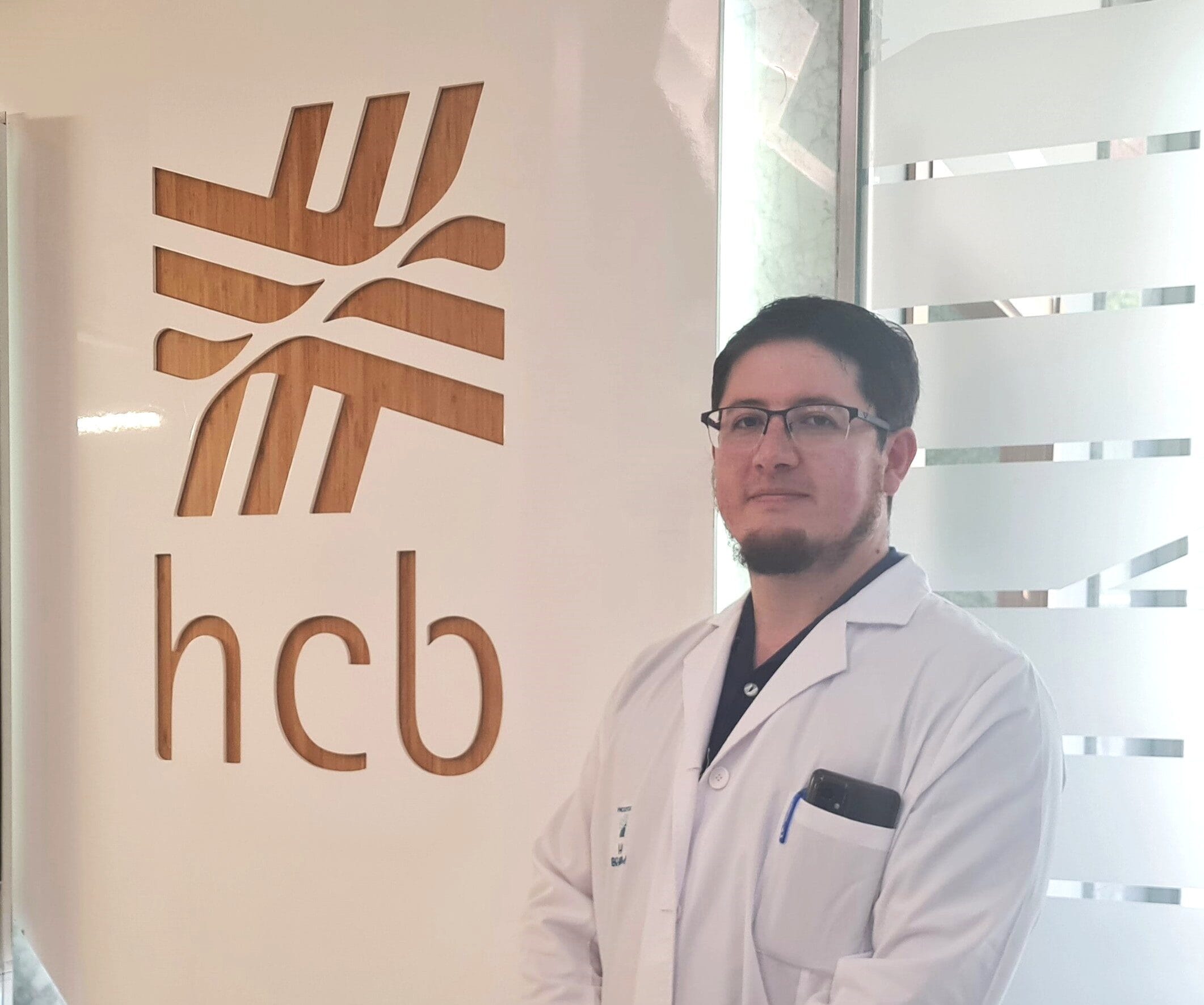
The Neurology Department at HCB Benidorm, with neurologists Dr Paul Vinueza and Dr José Javier Hernández, has already begun using p-tau217 testing in selected patients. This blood biomarker is associated with the presence of neuropathological changes related to Alzheimer’s disease.
p-tau217 testing can provide information, through a blood sample, about biological processes related to amyloid and tau pathology. Its incorporation into clinical practice may allow for a more accurate and accessible assessment of certain patients, always alongside their medical history, clinical examination and neuropsychological assessment and, when indicated, other diagnostic tests.
“This new diagnostic test allows us to detect the biological changes associated with Alzheimer’s disease at an earlier stage and with a level of accuracy that, until now, was only available through more complex tests. It will not always replace imaging studies or invasive tests, but it can complement them and, in many cases, when the results are very clear, it may avoid the need for some of these tests. It is always integrated with the patient’s clinical and neuropsychological assessment,” explains Dr Paul Vinueza, neurologist at HCB Benidorm.
The incorporation of biomarkers such as p-tau217 is part of a broader shift towards a diagnosis increasingly based on the biology of the disease, in addition to its clinical manifestations. This may help specialists identify more accurately those patients who require further investigations or specific therapeutic strategies.
Preparing for new treatments
But progress is not limited to diagnosis. The Neurology Department at HCB Hospitales is also working on protocols for the use of donanemab, one of the new treatments targeting Alzheimer’s disease in its early symptomatic stages.
Donanemab is a monoclonal antibody directed against beta-amyloid plaques. Its use is indicated for selected adults with early symptomatic Alzheimer’s disease, such as mild cognitive impairment or mild dementia, provided that the presence of amyloid pathology is confirmed and the established clinical and safety criteria are met.
Unlike traditional symptomatic treatments, these new therapies aim to act on one of the biological processes associated with the disease, representing a significant change in the way Alzheimer’s is approached. They are not a cure, nor can they completely stop the progression of the disease.
According to Dr Vinueza, this new treatment “represents a change in approach. For the first time, we have drugs that target one of the biological mechanisms of the disease — the removal of beta-amyloid plaques — rather than focusing solely on symptom control, as previous treatments have done.”
The treatment is intended for a carefully selected group of patients. Before treatment can be considered, the presence of amyloid pathology must be confirmed through the appropriate tests, while different clinical, genetic and safety factors must also be assessed. The patient must also be in an early stage of the disease.
A treatment requiring a specialised care pathway
The incorporation of these new therapies also represents an organisational and clinical challenge. Appropriate patient selection, confirmation of amyloid pathology and clinical and radiological follow-up are all part of a process that requires coordination and specialised expertise.
“It is not simply a matter of having access to a medication, but of being prepared to provide the entire care pathway it requires,” highlights the Neurology Department at HCB Hospitales.
Treatment requires specialist assessment and follow-up, including imaging tests and other monitoring, due to the possible occurrence of amyloid-related imaging abnormalities (ARIA) and other potential adverse reactions.
“At HCB Hospitales, we are already organising the necessary care pathway so that, when the time comes, we can administer the treatment safely and appropriately,” explains Dr Vinueza.
The importance of earlier diagnosis
The development of biomarkers and new treatments is making the identification of Alzheimer’s disease in its early stages increasingly important.
“We are moving from a diagnosis based solely on symptoms to one that also takes into account the biology of the disease, through amyloid and tau biomarkers and the assessment of neurodegeneration. And we are moving from purely symptomatic treatments towards therapies that act on disease mechanisms,” says the HCB Benidorm neurologist.
The first antibodies targeting amyloid have demonstrated a moderate clinical benefit. “We are not talking about a cure, but they already point us in a new direction,” says Dr Vinueza.
In the coming years, the specialist expects blood biomarkers such as p-tau217 to become increasingly present in clinical practice, helping to make diagnosis earlier and more accessible, while new therapeutic strategies continue to emerge.
“We expect combination therapies to be developed that address, in addition to amyloid, the tau protein and neuroinflammation,” he adds.
“In short, we are moving from treating the symptoms of Alzheimer’s disease to being able, although still to a modest extent, to act on the biology of the disease itself. And that changes the way we need to diagnose and approach it from the very beginning,” concludes Dr Paul Vinueza.